The Hidden Costs of Buying Ageing Condominiums No One Talks About
This commentary examines ageing condominiums in Singapore and the implications of the latest BCA policy Singapore. It highlights why MCST sinking funds are critical for long-term sustainability, as public support is limited to lift safety upgrades only. With no subsidies for general upkeep, private property maintenance remains the responsibility of owners. The piece explores how this shift reinforces financial discipline, increases transparency, and impacts buyer decision-making in an increasingly ageing property landscape.
CONDOMARKET UPDATES
3/22/20262 min read
Ageing Condos, No Bailouts: What BCA’s Move Really Means
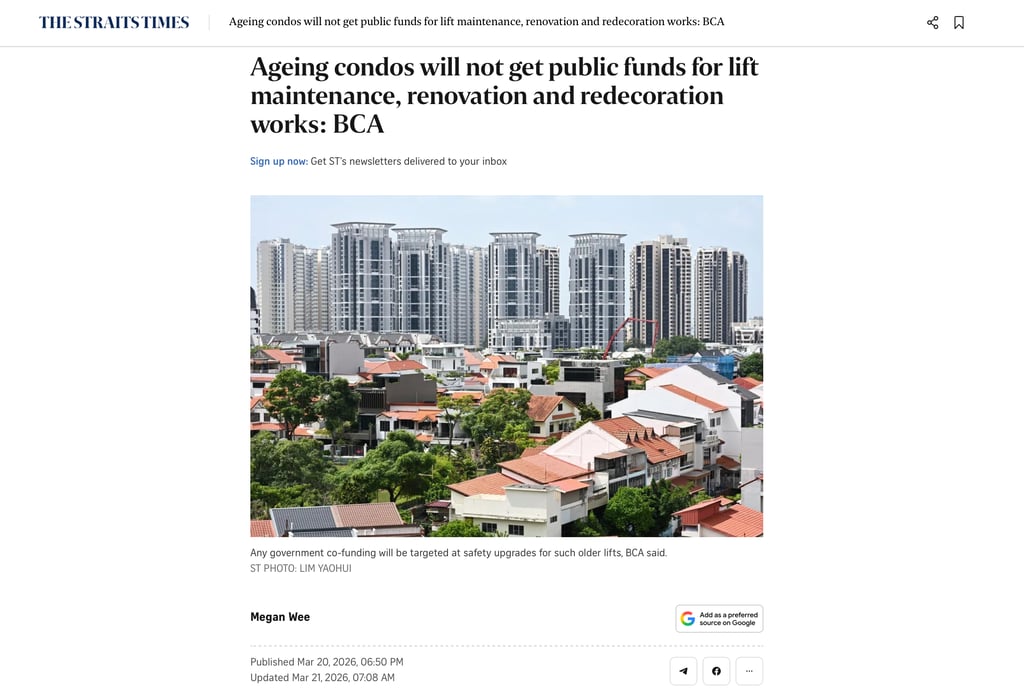
According to The Straits Times (“Ageing condos will not get public funds for lift maintenance, renovation and redecoration works: BCA”, published Mar 20, 2026), the Building and Construction Authority (BCA) has clarified its position on ageing private developments:
No public funds for renovation and redecoration (R&R) works
No funding for lift maintenance, repairs, or replacement
Any co-funding will be strictly limited to safety upgrades for older lifts
This clarification follows public discussion on whether the Government might step in to support ageing condominiums financially.
Clear Position: Maintenance Is Still the Owners’ Responsibility
As reported by The Straits Times, BCA made it clear that:
Maintenance and upkeep must be funded by the development itself
Costs should come from MCST maintenance and sinking funds
Public funding is not intended to support general estate improvements
This includes:
Lift repairs and replacements
Common area refurbishment
General building maintenance
Private developments remain financially self-sustaining.
What Government Support Will Actually Cover
The article highlights that co-funding, if implemented, will only apply to lift safety enhancements, such as:
Preventing lifts from moving when doors are not fully closed
Automatically stopping lifts if they move upwards too quickly
These upgrades are meant to bring older systems in line with modern safety standards.
Important distinction:
Not for fixing breakdowns
Not for replacing lifts
Only for adding safety features
Not a Bailout: BCA’s Clarification
The Straits Times article also addressed the debate on whether this is a bailout.
BCA’s position:
This is not a bailout
Property owners remain responsible for maintenance
The intent is to support safety, not subsidise private assets
Even legal commentary cited in the article frames this as public-good expenditure rather than financial rescue.
The Bigger Context: Ageing Private Housing Stock
Based on the report:
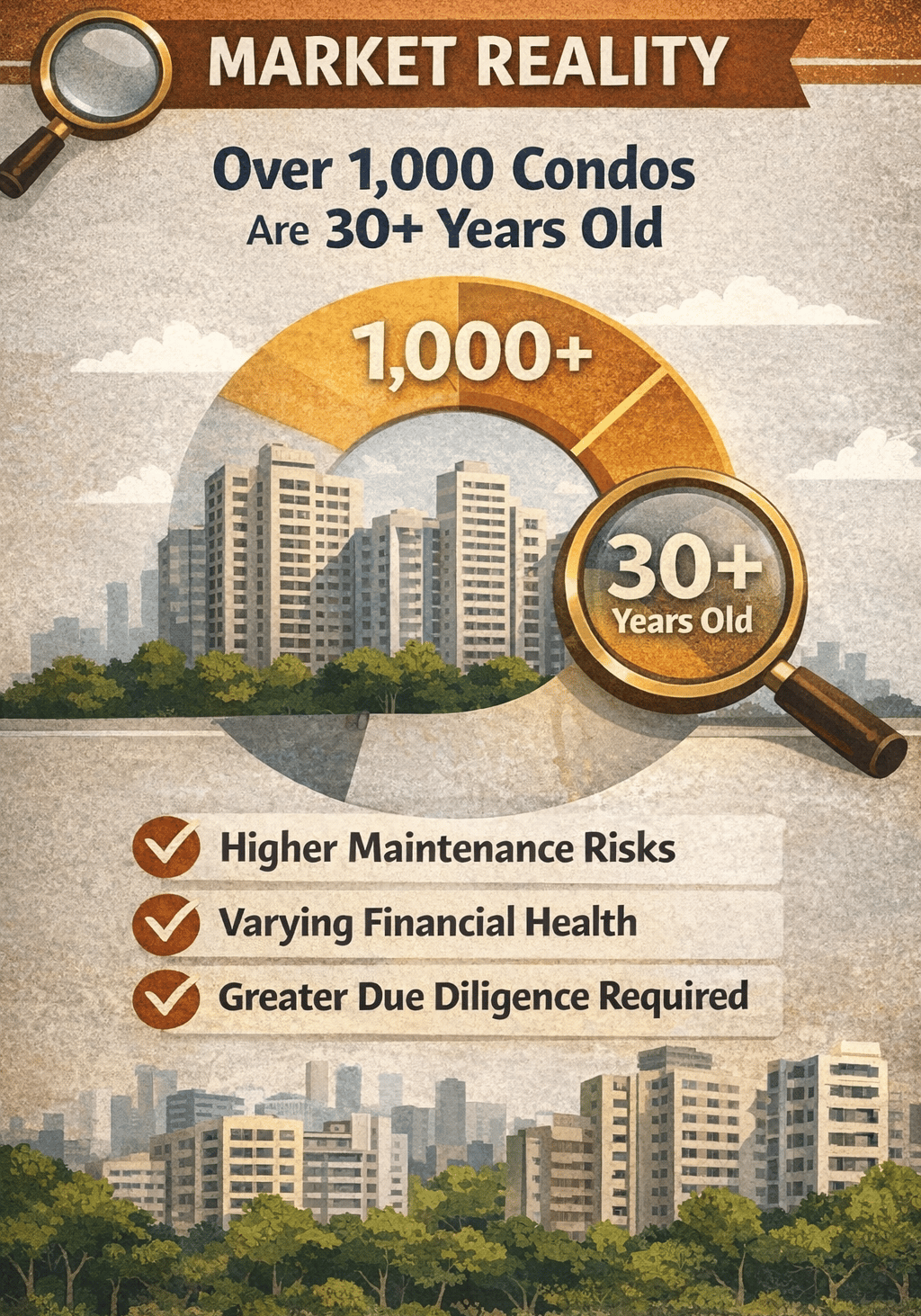
More than 1,000 out of 3,750 private developments are at least 30 years old
Not all have sufficient funds for major maintenance issues
These include:
Lift breakdowns
Concrete spalling
Water seepage
This raises concerns about long-term financial preparedness across older developments.
Upcoming Changes: Stronger Oversight and Transparency
The Straits Times report also noted that BCA is reviewing the Building (Strata Management) Act.
Potential changes include:
Submission of MCST financial and facilities data
Publication of selected financial information for buyers
This would allow buyers to better assess the financial health of developments before purchase.
Important Contrast: Public vs Private Housing
The article highlights a clear distinction:
HDB estates receive substantial government funding for lift upgrades and replacements
Town councils are supported to ensure timely upgrades
In contrast:
Private developments receive only limited, targeted support
Focus remains strictly on safety enhancements
What This Means Going Forward
From the article, several implications are clear:
No expectation of government support for general maintenance
Safety upgrades are the only area of potential co-funding
Ageing developments with weak funds will face increasing pressure
Buyers may gain more visibility into MCST finances in future
Conclusion: Responsibility Remains Where It Belongs
This policy direction reinforces a consistent principle:
Private property ownership comes with full responsibility for maintenance
Government support is limited to safety concerns with broader impact
Financial discipline within MCSTs is essential
There is no shift toward subsidising private developments.
Instead, the message is simple:
Maintenance must be planned
Costs must be funded
And weak financial planning will eventually surface as real financial consequences
Not dramatic. Just very real.
Clarity First, Decisions Second
Contact Us To Plan Your Purchase With Real Numbers
Property Wealth Report (PWR)
Available exclusively to my clients.


PropNex Realty Pte Ltd (Licence No: L3008022J)
480 Lorong 6 Toa Payoh #10-01 HDB Hub East Wing Singapore 310480